

Which Skincare Ingredients Work Well Together? A Skin Expert’s Guide
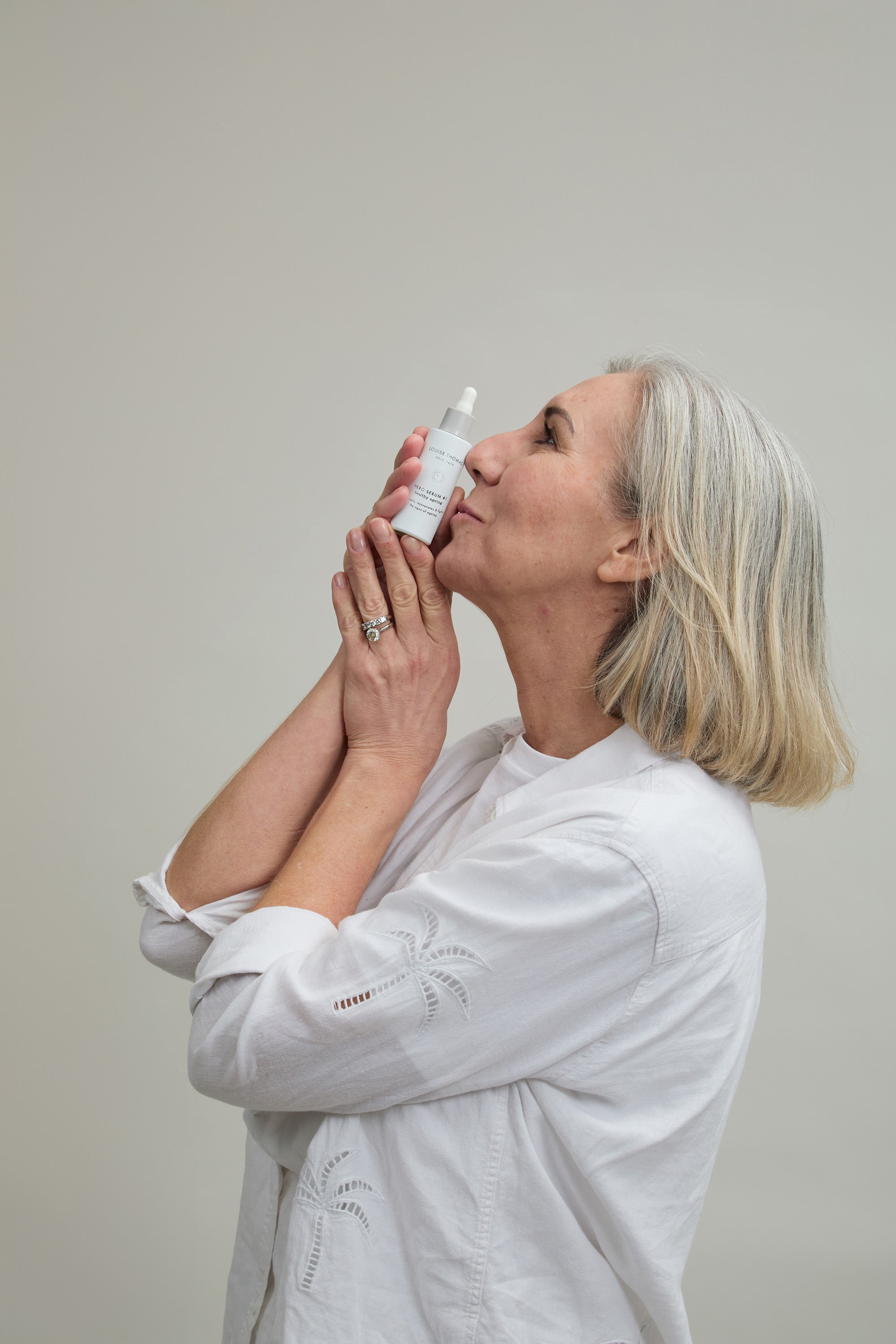
If there’s one thing I wish more people understood about skincare, it’s that a long list of impressive ingredients doesn’t necessarily make a better product.
After decades of working with skin, I see so much focus now on individual ingredients. Retinoids. Vitamin C. Peptides. Hyaluronic acid. Acids.
But skin, and skincare formulation, is far more complex than simply adding the latest trending ingredient to your routine.
Some ingredients complement each other beautifully. Others need to be introduced carefully. And sometimes, using more active ingredients simply creates irritation without giving you a better result.
The goal isn’t to use everything. It’s to understand what your skin needs and choose well-formulated products where ingredients have been selected to work effectively together.
Which skincare ingredients work well together?
There are lots of potential combinations, but these are some of the pairings I particularly like when thinking about long-term skin health:
-
Granactive Retinoid + peptides for skin renewal and smoother, firmer-looking skin
-
Vitamin C + SPF for antioxidant defence and UV protection
-
Hyaluronic Acid + barrier-supporting ingredients to attract hydration and help keep moisture in the skin
-
Lime Pearl™ + BioEcolia® for gentle exfoliation and supporting a balanced skin microbiome
-
Fucogel® + Sea Buckthorn Oil to hydrate, nourish and soothe sensitive, dry or redness-prone skin
You don’t need to know what all of those ingredients are. Let’s look at what each pairing actually does, why they can work well together and where you might find them in your skincare.
What are peptides, and can you use them with a retinoid?
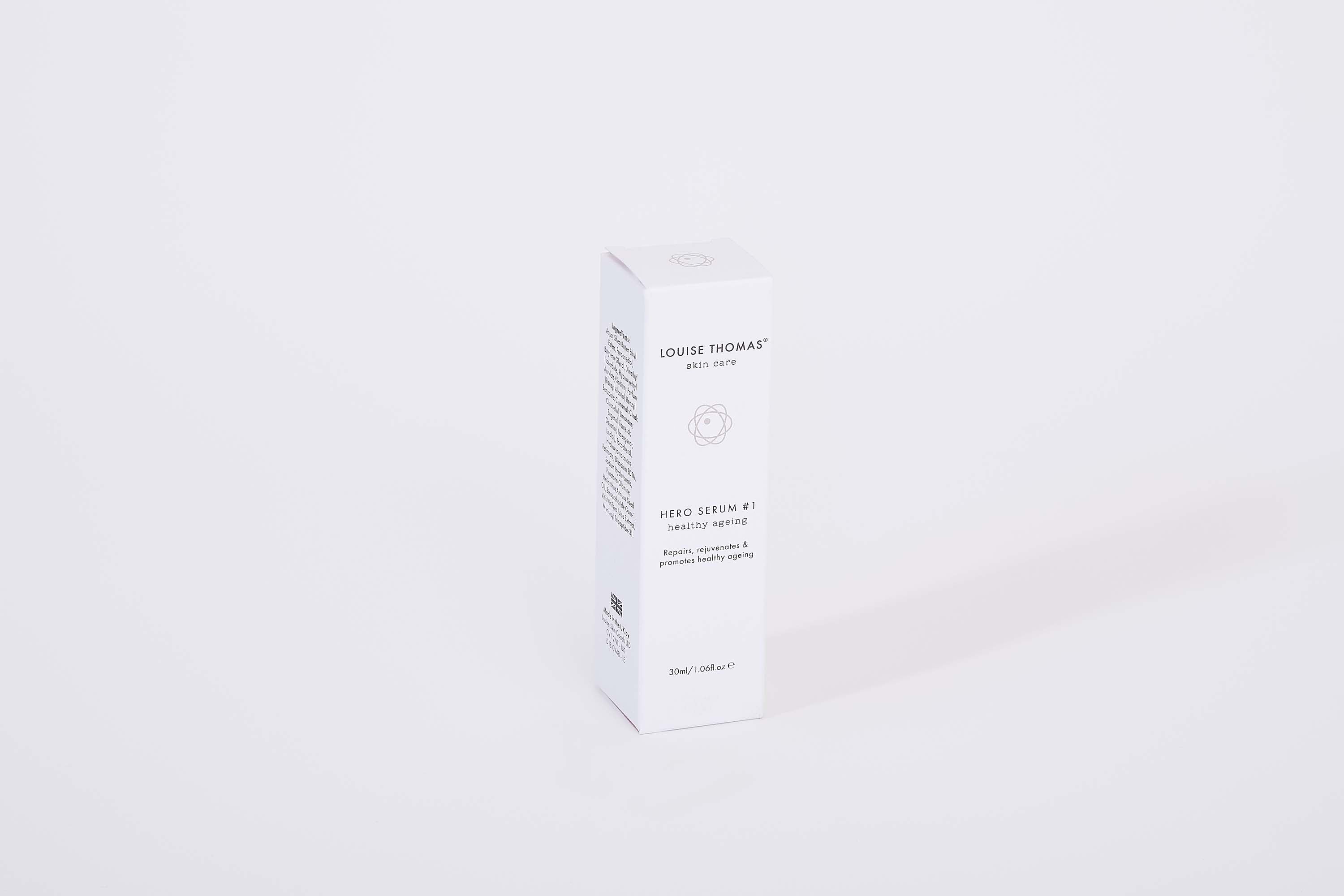
Peptides are short chains of amino acids, the building blocks our skin uses to make proteins such as collagen and elastin. There are many different types of peptides used in skincare. Myristoyl Tripeptide-31, which I use in Hero Serum #1 Healthy Ageing, is one example.
Retinoids, meanwhile, are Vitamin A-based skincare ingredients and are amongst our best-researched ingredients for addressing visible signs of skin ageing. They support skin renewal and can improve the appearance of fine lines, texture and uneven pigmentation over time.
Used within a carefully considered formulation, retinoids and peptides can complement one another beautifully.
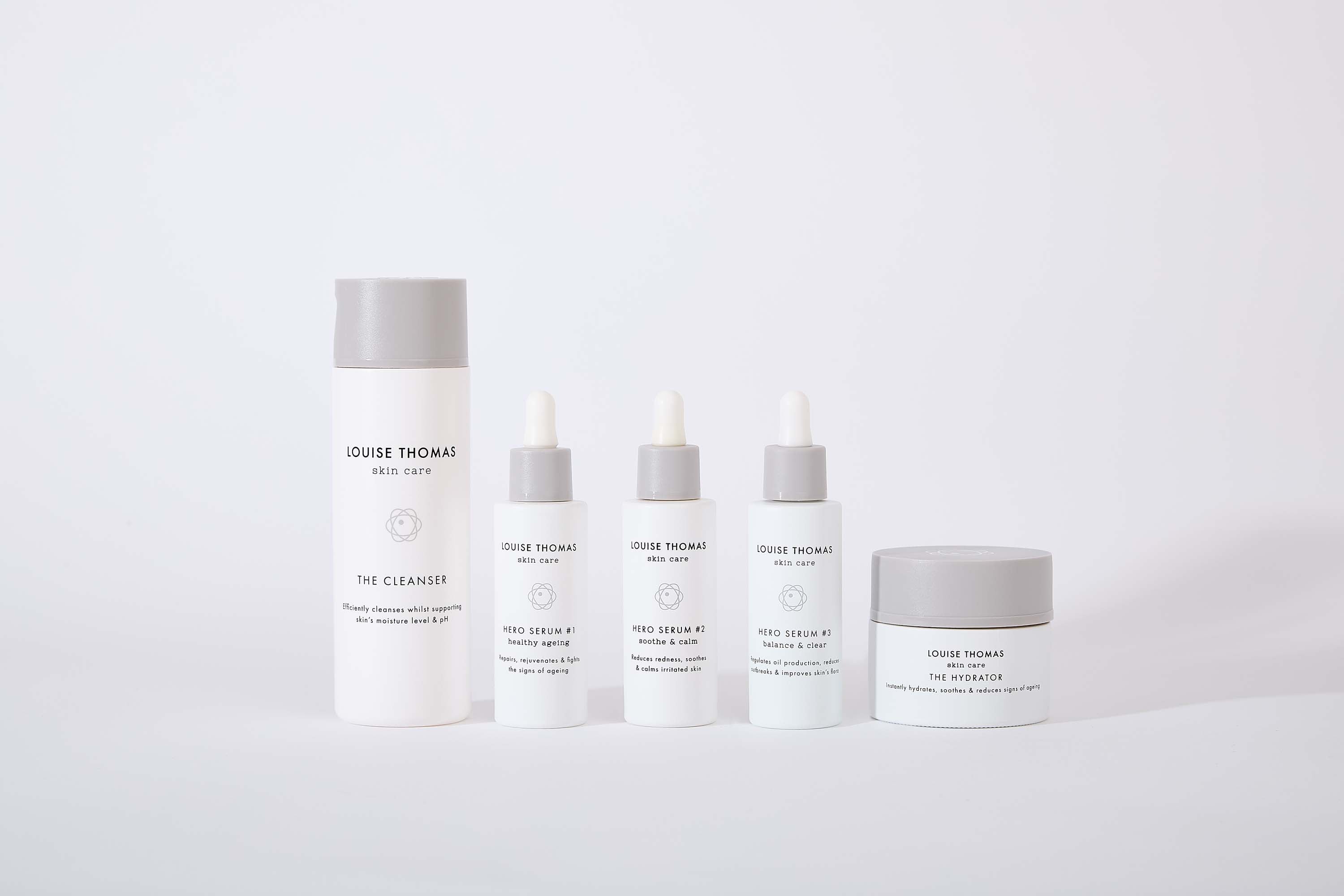
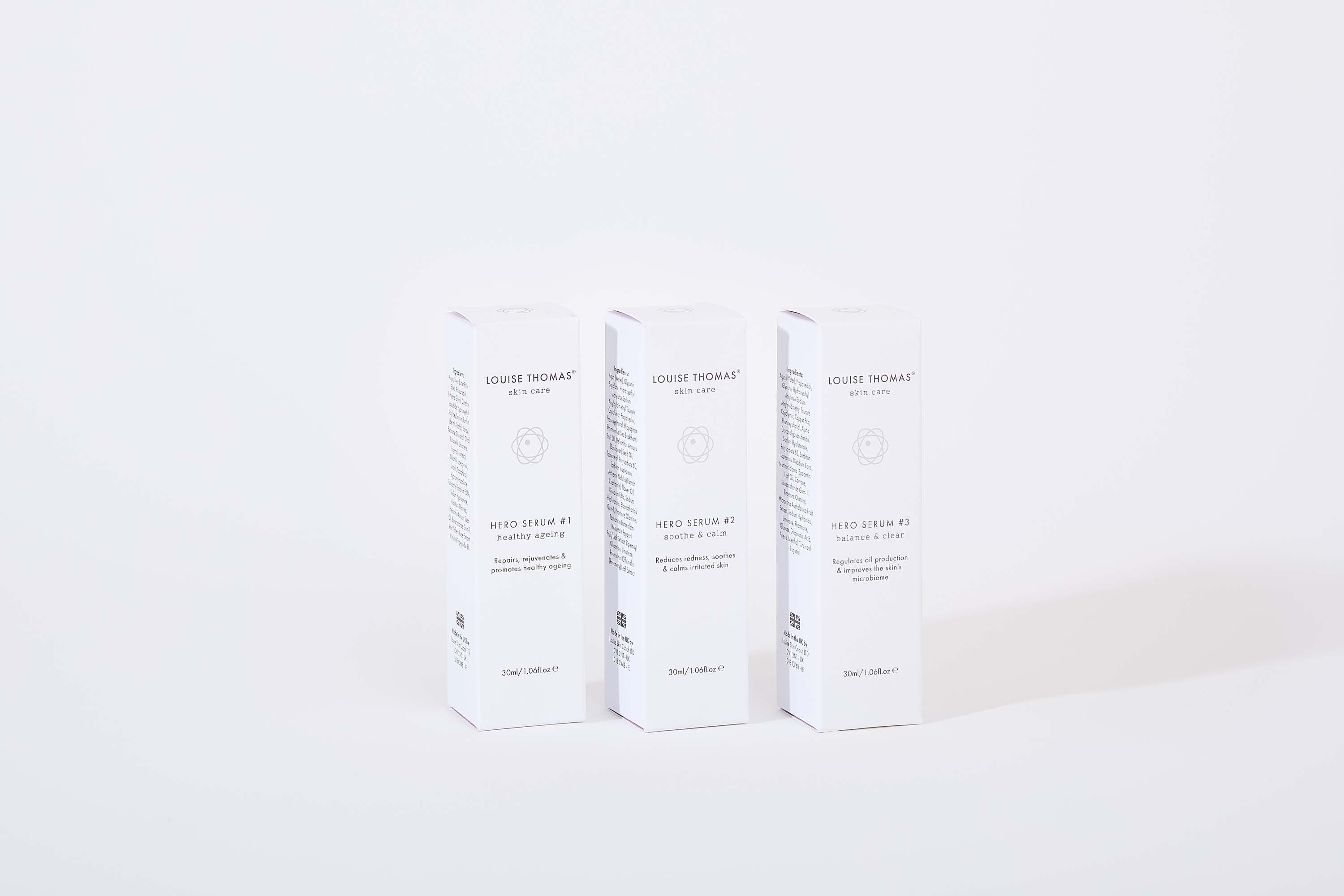
It’s why I formulated Hero Serum #1 Healthy Ageing with Granactive Retinoid alongside Myristoyl Tripeptide-31, antioxidant-rich grape extract and our Hydrating Complex.
Healthy ageing isn’t about attacking the skin with the strongest actives possible. It’s about encouraging renewal while continuing to support skin health.
Should you use Vitamin C with SPF?
Yes, but they have different jobs.
Vitamin C provides antioxidant support, helping to defend the skin against oxidative stress from environmental factors. Sunscreen protects the skin against UV radiation.
Used together in your morning routine, they provide a more rounded approach to protecting your skin from factors associated with premature skin ageing.
Vitamin C does not replace SPF. Daily sunscreen remains essential.
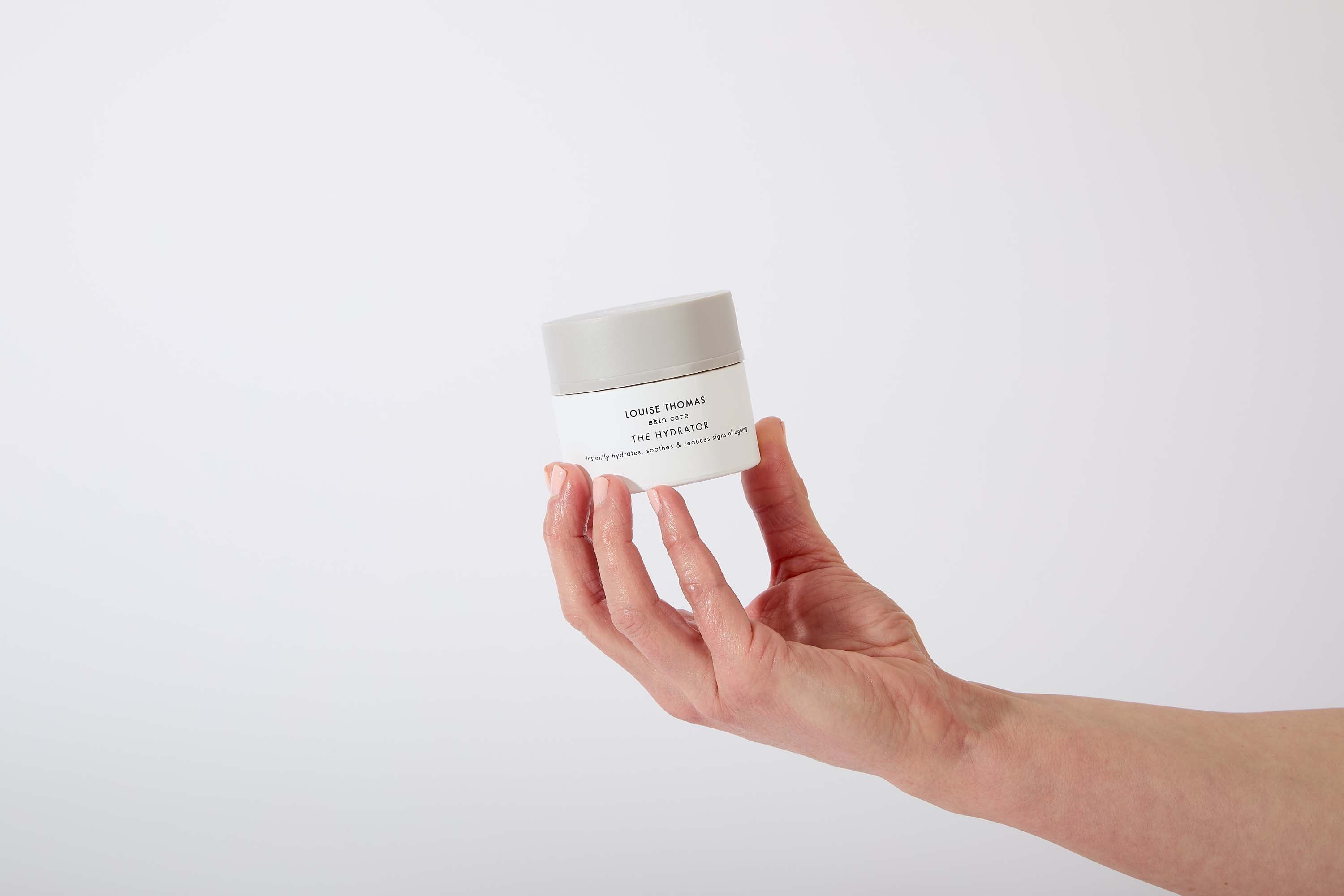
This is why The Hydrator contains Ascorbyl Tetraisopalmitate, a stable, oil-soluble form of Vitamin C, alongside our Hydrating Complex to support hydration and the skin barrier.
What works well with Hyaluronic Acid?
Hyaluronic Acid is what's known as a humectant. Put simply, it helps attract and hold water, making it a very useful ingredient for keeping skin hydrated.
But adding hydration is only part of the picture. We also need to think about supporting the skin barrier, essentially the protective outer layer that helps keep moisture in and irritants out.
This is why I like combining hydrating ingredients with ingredients that support and nourish the skin.
Our Hydrating Complex combines glycerine, Sodium Hyaluronate, a form of Hyaluronic Acid, and a plant-derived polysaccharide to support hydration and the lipid barrier.
What ingredients work well for oily, congested or breakout-prone skin?
One of the biggest mistakes I see with oily, congested or breakout-prone skin is the assumption that it needs to be stripped, scrubbed or continually treated with strong acids.
It doesn’t.
When I formulated Hero Serum #3 Balance & Clear, I wanted to address congestion and breakouts while still thinking about the overall health of the skin.
Lime Pearl™ provides gentle botanical AHA exfoliation to help refine the complexion, while BioEcolia® supports a balanced skin microbiome. The formula also contains Cuivridone, which supports blemish-prone skin.
The aim is to refine and rebalance without unnecessarily compromising the skin.
What ingredients work well for sensitive or redness-prone skin?
With sensitive, reactive or redness-prone skin, sometimes the most productive thing you can do is stop adding more aggressive actives.
Hydration, soothing ingredients and supporting the skin barrier become particularly important.
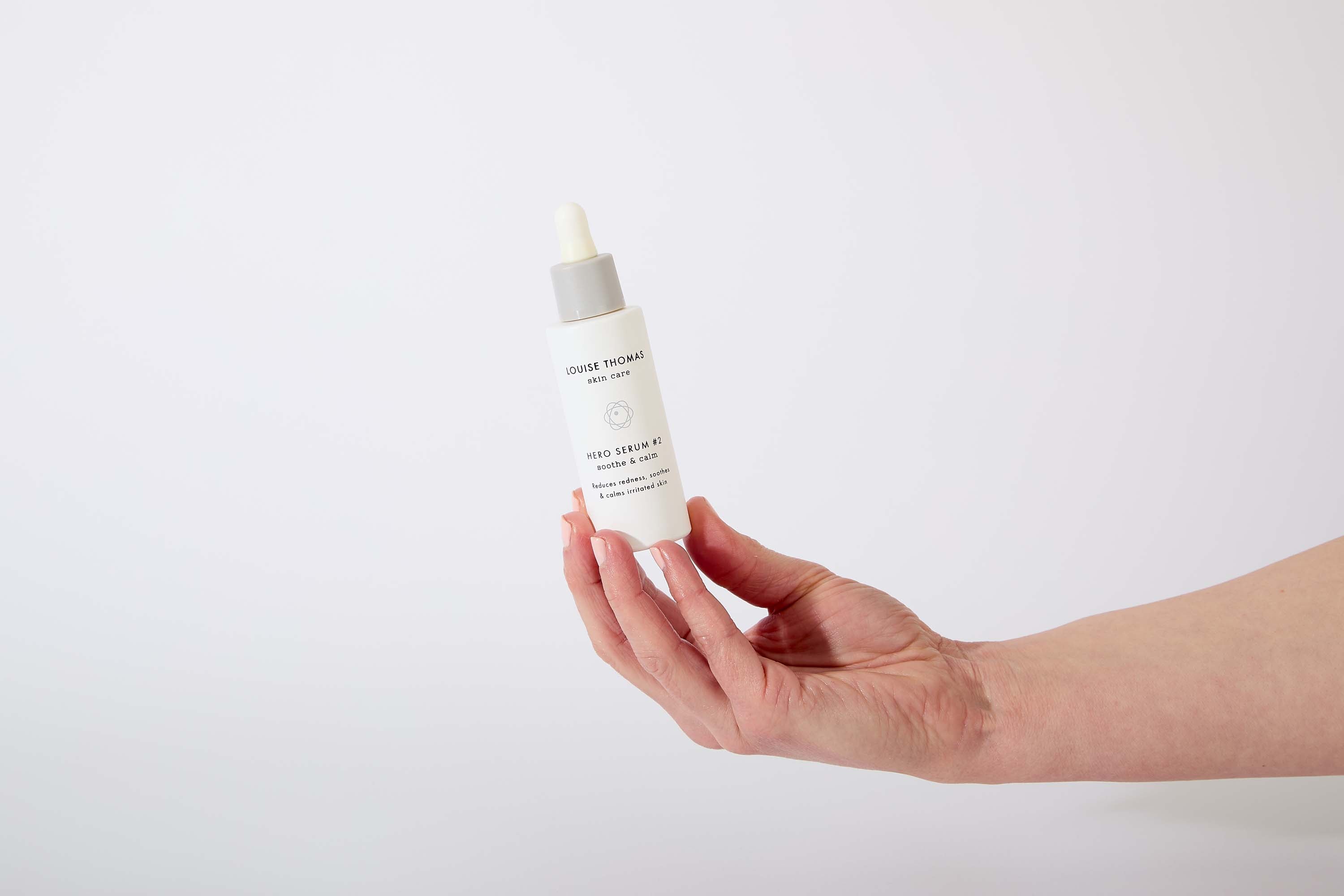
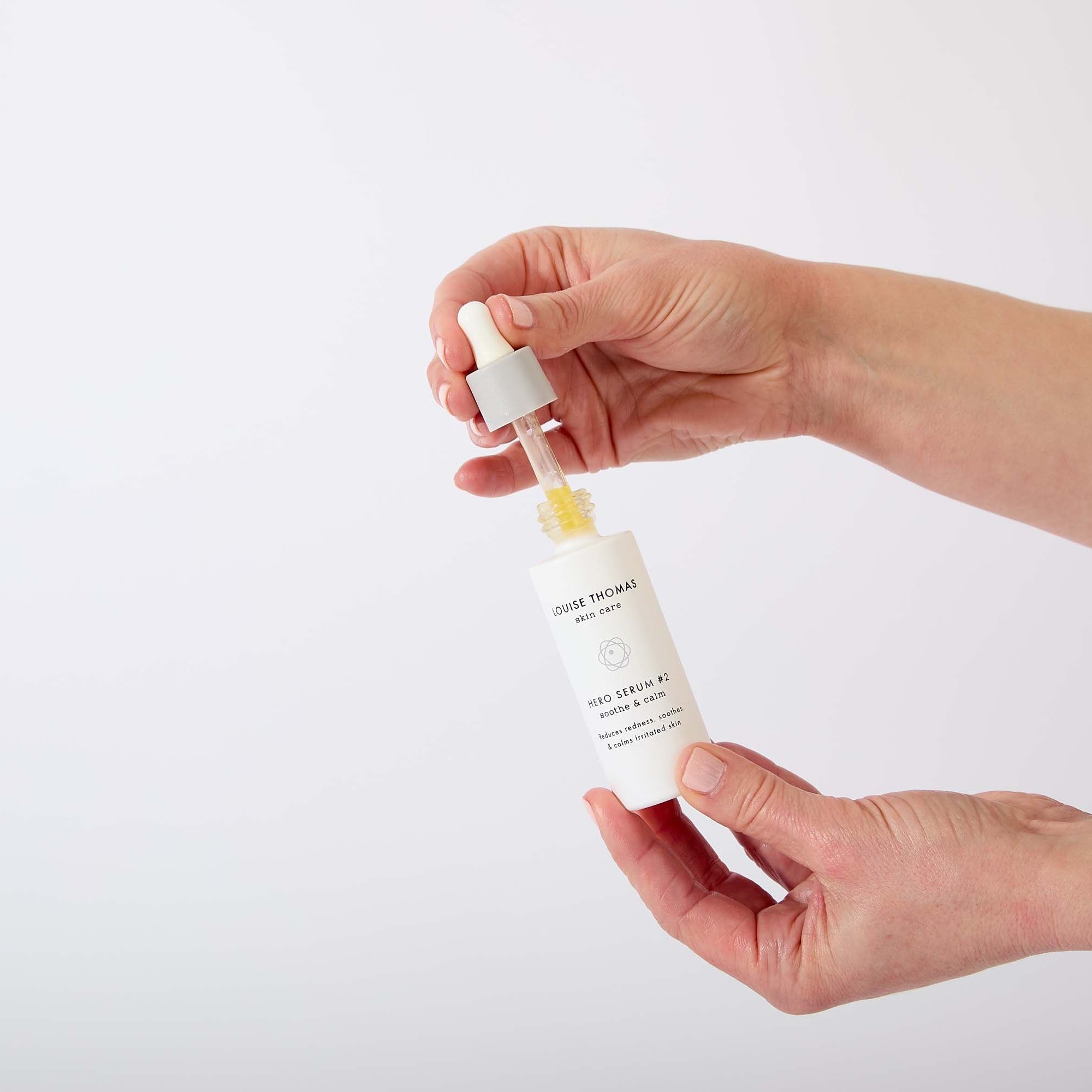
Hero Serum #2 Soothe & Calm combines Fucogel®, Sea Buckthorn Oil and our Hydrating Complex with ingredients selected to hydrate, nourish and calm the skin.
Again, it isn’t one ‘hero’ ingredient doing all the work. It’s the formulation as a whole.
Which skincare ingredients shouldn't you mix?
This is where skincare advice online can become unnecessarily frightening.
There aren’t endless lists of ingredients that must never be used together. More often, the problem is that combining several strong actives at once can increase the likelihood of dryness, sensitivity and irritation.
For example, using a retinoid alongside strong AHA or BHA exfoliation may simply be too much for some skins, particularly if you’re new to active ingredients or already have sensitive skin.
Layering multiple exfoliating products can cause similar problems.
Your skin doesn’t need to tingle, peel or feel tight for your skincare to be working.
Do you actually need multiple serums?
Not necessarily.
I think this is one area where social media has made skincare far more complicated than it needs to be.
You don’t need a separate bottle for every ingredient you’ve been told is beneficial. A well-formulated product should already have done much of that thinking for you.
When I formulate, I’m looking at how ingredients complement one another, the skin concern we’re trying to address, hydration, barrier function and how that product fits into a realistic routine.
For most people, good skincare can be remarkably simple:
Cleanse. Treat. Hydrate. Protect.
Choose your treatment based on what your skin actually needs rather than what happens to be trending.
Because good skincare isn’t about using more.
It’s about using the right ingredients, formulated intelligently, for your skin.
Louise x
Frequently asked questions
Can I use retinoids and peptides together?
Yes. They can complement one another within a well-formulated healthy-ageing routine.
Can I use Vitamin C and SPF together?
Yes. Vitamin C provides antioxidant support while SPF protects against UV radiation. Vitamin C should never be used as a replacement for sunscreen.
Should I use several active serums at once?
Not necessarily. Using more active ingredients doesn’t automatically produce better results and can increase irritation in some skins.
What skincare ingredients should I use after 40?
Choose ingredients according to your skin condition and concerns rather than age alone. Retinoids, peptides, antioxidants and good hydration can all play useful roles in supporting healthy ageing.